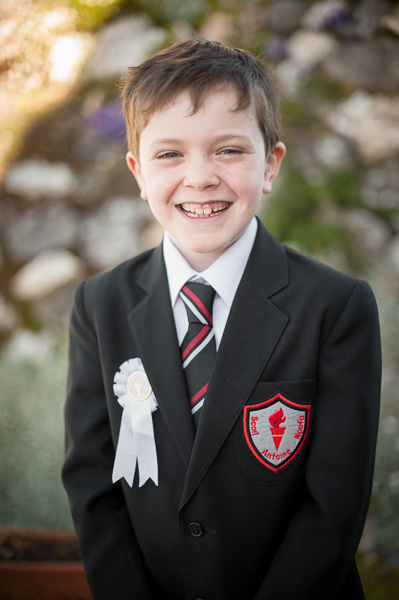
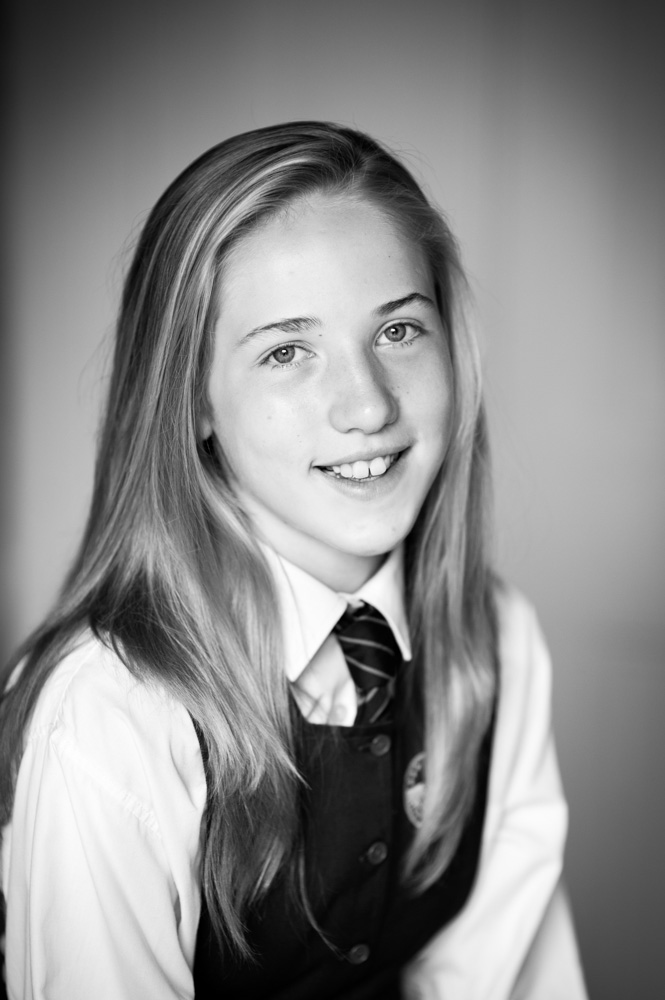
Back in the office today after the first busy weekend of First Communions.
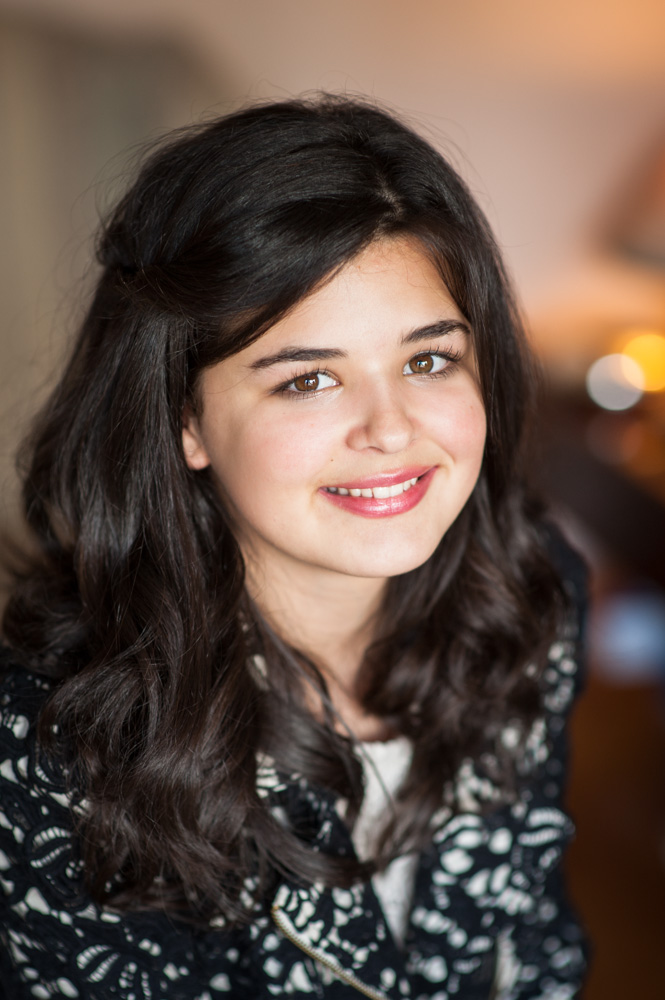
Everyone was in fine form – despite the untimelty downpoor on Saturday. It’s a lovely time to be doing family photos and there are always some lovely photos coming out of the Communion sessions. The kids are a great age: full of fun and confidence.
I’ve my work cut-out getting through all those pics before next weekend but if you had a session with me over the weekend then proofs will be available shortly.
If you have a Communion coming up then we’re fully booked for the 23rd May but there are some slots available on the 9th and 16th May so call now 021-4293714
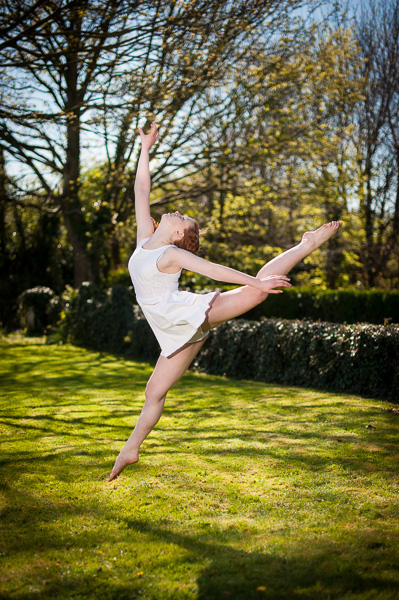
It’s in the nature of what I do that many assignments come at short notice. Yesterday lunchtime I was asked to photography my daughters for a promotional image for the dance company they work so hard for. My pleasure. But what to do?
What do we have to work with: it’s sunny, we are blessed with a large garden but it’s a bit cluttered (trampolines, sheds, swings, nets etc), we also have access to our neighbour’s garden which is a lot greener (but quite narrow). Thankfully it’s half-day at Secondary school and the girls are in fine form and have matching dresses.
So we’ll work out the garden thing but the sun is the first challenge. Nice and bright but we need to make sure we deal with the contrast between the direct sun and the shadows. There’s no real shade at this time of the year so we need to plan to shoot in full sun. Personally I generally shoot into the sun or at a slight angle so that my subject is in reasonably even shadow and we might get a bright rim light.
Fine but now there’s a stop (or more) between my subject and the background. You have two options: expose for the shadow and blow the background by overexposing it; or get some additional light into the subject using a reflector or an artificial light source. I want my background so it’s going to be the second option. I’m a big fan of the reflector but I don’t have one big enough to light a full length shot and no time to find something to improvise. On site I’d normally use on-camera flash to fill in here but I have a little more time and enough kit at home to try something else: off camera flash to one side. This gives me the option to get more dramatic lighting (since it’s a dance pose).
When we get to the bottom of the garden there’s actually some lovely dappled shade at the bottom of the garden from the bare trees. Two bonuses here: the back-lighting is now way more interesting and textured; it’s also somewhat diffused so there’s slightly less contrast between the sun and the shade. Result.
As it happens my first few test shots show that the camera’s exposure is pretty much bang on so we work away.
Some lovely stuff in there and hopefully we’ll be seeing them around Cork very soon ahead of the show in May.
Daughter Number One has been on at me since Christmas for some nice shots of her dancing to balance out the swimming pics on her wall. So as well as the duets for Tina we do a few of her on her own. I’m sure Other Daughter will want some now too when she sees these…
After what has proven to be a number of false-dawns, I’m back on the blog and determined (this time) to generate some interesting and useful content.
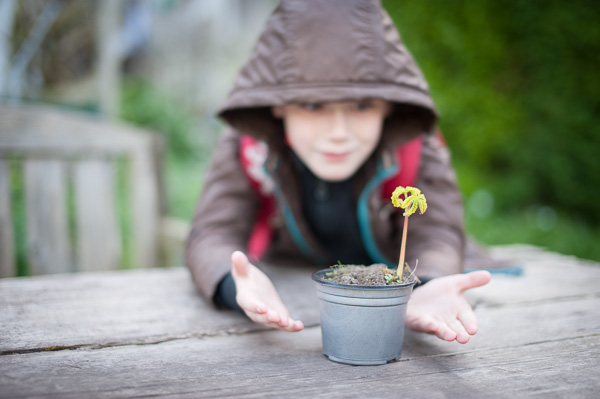
A Promise of New Growth
Many people have commented on seeing my work in a particular local press publication (and an associated magazine). Although that gig was fun while it lasted, that relationship has run its course and I’m now able to focus my efforts back to my core business.
It was a good experience on a number of fronts:
I had the pleasure of shooting profile pictures of a wide variety of interesting and entertaining people – photographing ‘normal’ adults for profiles is quite a different experience to chasing kids around a park and you just can’t do enough of it. Especially when you have limited time and resources and have to think on your feet. You learn something about them, about yourself and about they way you work every time.
I was reminded of why I went to work for myself and the good and the bad of doing so.
It also served to remind me of my core values in business and how they separate me from others. I firmly believe that a business differenitates itself by how it behaves much more than what it produces and the key to success is to do the right thing by people and walk the talk.
So I need to make a public apology to everyone who didn’t get as much of my time and attention over the last six months due to the distraction of The Press. I vow to re-focus my efforts on doing that I do best: looking after people and their memories.
Still lots going on here at Rob Lamb Photography. Media-savy followers may have noticed that I started a regular gig with the Cork News in October with is keeping me busy meeting a lot of interesting personalities and local businesses throughout the city on a weekly basis.
It’s not all pounding the streets for a scoop, photo calls, press deadlines and the smell of hot presses (that’s printing presses, not storage for your towels).
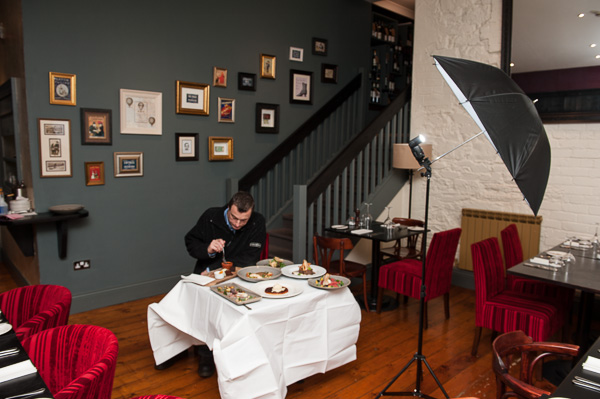
Cork News list a number of the city’s finest restaurants amongst their clients. Normally most food isn’t that disgestable by the time you’ve finished photographing it but if the chef is kind and you work quickly enough, life can be good…
Well done to Nathalie and all the other constants in the Belle of Ballinlough over the weekend.
We were very proud to have Nathalie represent us on stage but unfortunately this wasn’t her year.
Congrats to Eimear representing the Orchard Bar who is the 2014 Belle.
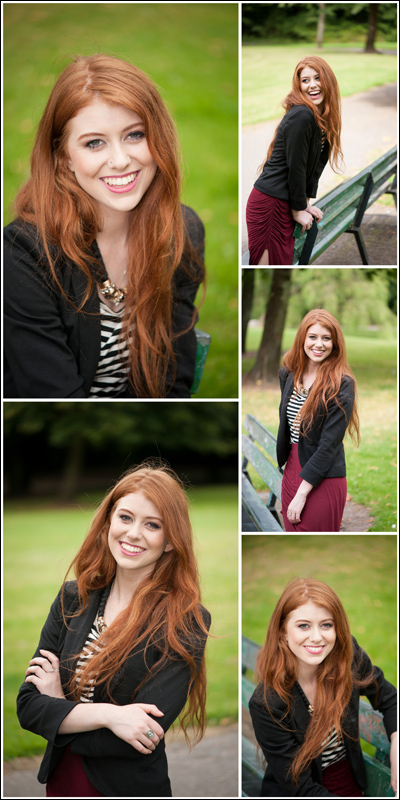
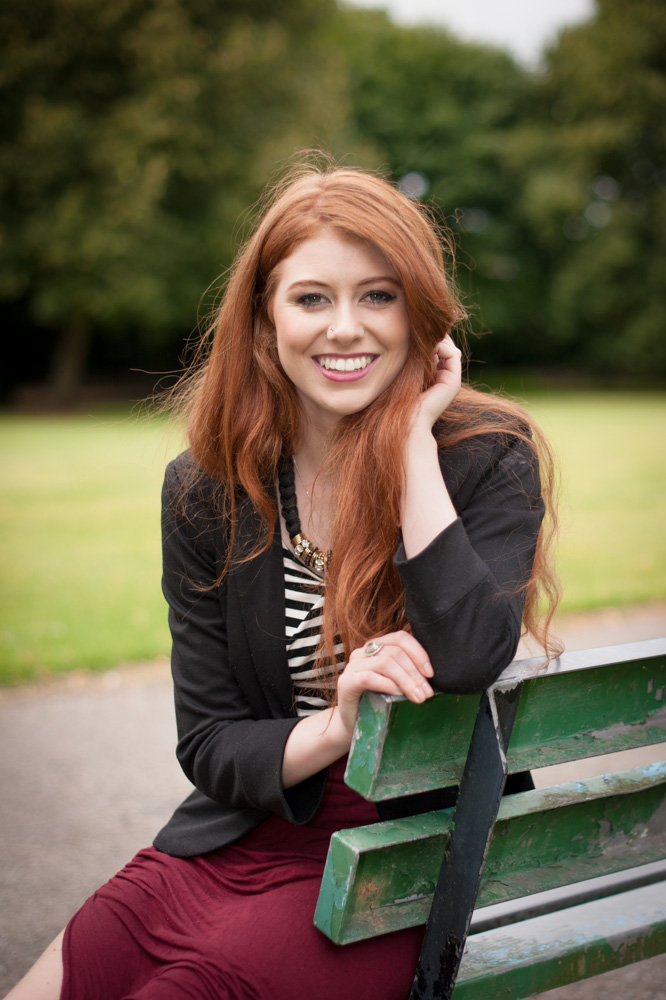
Nathalie has a natural presence and was certainly very comfortable in front of the camera when we did a quick photo session in the Japanese Gardens last week. Here are a few more pics from the session and you can follow her Street Style blog at https://www.facebook.com/Streetstyleandsmile
We’re delighted to be supporting Nathalie Tobin in this year’s Belle of Ballinlough.
Good Luck at the Judging night tomorrow at the Silver Key and we’ll see everyone on Saturday at the Youth Club Summer Festival.
We’ve been to the Festival most years since the kids were young (and even got roped into the acts last year) but this is the first time we’ve had our act together enough to get involved in the Belle. I hope all the girls and their escorts have a great night and fingers crossed for Nathalie.
Confirmations started a couple of weeks ago and we’ve had a number of sessions for families since then.
As in previous years we can do more formal studio sessions or sessions at home for Confirmations. For many families the Confirmation is a much more low-key occassion compared to First Holy Communion.
However it marks an important transition: from primary school to secondary; from child to young adult; from tween to teen. This are set to change for these kids. Big Time. It’s a great opportunity to get pictures of everyone together before all this comes upon ye.
We are available on the day of the Confirmation but we’ve also had sessions booked on other days.
Sessions on the day are more convienient and allow you to get pictures done while everyone is together.
Photographs for your Confirmation
Home sessions afterwards allow you to take more time over the pictures and maybe show-off that outfit one more time.
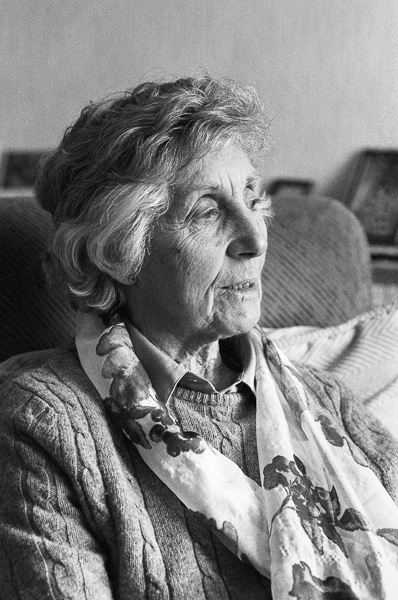
Well we’ve some lovely images here and personally it was well worth getting these taken. She’s someone who I’ve found difficult to capture in an image and now I feel I have something that starts to do her justice.
However this was also a series of experiments in photography as well as an excuse to photograph Nana.
I’m definitely liking the medium format thing:
I really like shooting with the longer focal length lens (for the same distance to subject) and the look and feel it creates in a portrait.
I kinda like the ultra-slow consideration that’s forced by 12 shots. It’s very different and for the right subject works very well. I need to not rush through them and forget the tendancy for continuous shooting. If I talk more and shoot less without putting pressure to click every few minutes I might get more variation from my 12 and more keepers.
I really like the interaction not being stuck behind the finder.
I don’t however love it so much I’m going to drop €20k on Medium Format digital. If I had the client base for more of this I might consider it.
My 35mm digital working is much more dynamic. It allows much more freedom to shoot and it suits the way I work with kids much more. It has less advantages for more static subjects like this but:
Working on the tripod with the release got better this time and is something that I will definitely bring into more of my commercial portrait and profile sessions. In fact I’ve already shot one almost entirely from the tripod.
35mm Film presents very little extra to add to the way I work at this stage. It’s has only two things going for it and these aren’t going to be enough to offset the cost and advantage of Full Frame digital:
It ‘slightly’ slows you down and makes you think a bit more before shooting duplicate images. But you could force yourself to work this way equally with digital.
That film looks is really nice – and it hides lots of technical issues that become distracting in high-definition digital. But the hassle and expense of processing 35mm black and white film and the ability to do this digitally (albeit not as easy or consistently) doesn’t make this worth while apart from the sheer fun of it.
I have to give up part of the workflow: I am at the mercy of the lab unless I take the time to process my own film. The amount of crap and scratches on the negs of all the films was quite astonishing. In fairness this is probably a function of the amount of film being processed but this was also a feature in my previous use of film. It was less of an issue with the 120 as the negs are that much larger but it killed off a few images on 35mm completely.
So it’s easy to see why 35mm film is pretty much a craft market these days. It’s lovely to work in but lacks a strong case for sticking with it.
The assumption here though is that you can afford to kit yourself out with 35mm Full Frame DSLR kit. If you’re shooting a crop sensor or even a compact with a smaller sensor and you want that ’50mmf1.4′ look then in fact a film SLR and a 50mm lens may be your most cost effective way of starting out. It might be enough to help you understand if this is going to be useful before forking out and extra few grand on a Full-Frame DSLR.
I’ve learned something about shooting portraits. I have some new techniques that are now good enough to use commercially (and can still improve).
I’m not sure I’ll be using 120 film in my commercial work but I will be ordering some more film for a few more personal shoots.
The fun of spending time with Nana, shooting with all those cameras and the feedback on the images was definitely worthwhile.
Finally I got my last roll of 35mm Ilford HP5 Black and White film back and scanned it in. It had to be hand processed by someone in Kinsale (I still have the wherewithall to do it myself at home but buying a batch of chemicals for one film wouldn’t have been worth it).
I called this post ‘an old friend’ but in fact there are two here:
I was always a fan of HP5 in the old days. I had a collection of cheap, slow consumer zoom lenses so 400 ASA film was handy. I also shot a lot of college sports in dark gym-halls (esp Basketball) so I used to push it up to 3200 ASA on occassion and it coped admirably – even sitting under the net with a 28f2.8 lens you needed 3200 ASA to get a decent shutter speed.
I loaded it into the Nikon F4e. Still one of my favourite Nikons just for the pleasure of handling it: the weight, the simplicity of the UI, the sound of that shutter and film advance. This was the camera that really got me taking pictures again after a long absence. I bought it from the US on eBay and then set out equipping it with all its bits and pieces (batter grips / screens / lovely old lenses)
Enough of the gooey-eyed retro-tech love. How did they get on?
Well, er, the pictures are different. Not really worse or better but just different. I suppose I’m mainly comparing it it the 35mm Full Frame Digital of the D700: same format, same lenses.
Slightly Shotgun. So rarely in the old days would I have spent a whole film on one subject so there is some duplication and waste here (oh, the sound of that motor drive). But no-where near as much as the digital equivalent. So the restriction of 24 exposures (as it happens) has made the process slower and more delibrate but not as much as the ‘blad did. But it’s also not as spontaneous as the digital. There are some keepers but not as many as the digital version. The important distinction here for me is the absolute number of keepers at the end. So although the percentage is lower with digital it results in more keepers and better chance of getting something genuinely spontaneous in the mix.
Grain – bags of it. No doubt about it, film is different. The grain of the higher speed film is obvious although in this case not undesirable or inappropriate. The grain here is nice I think. It appears the old F4e was pretty sweet in terms of focus – in reality I suspect that the grain is hiding focus inacuracies which again isn’t a bad thing. While shallow depth of field is nice, it only serves to contentrate the viewer on the subject. Obvious softness in focus in key areas is distracting. All that pixel-peeping-crtical-focus stuff isn’t really helpful for portrait work (and I’m only shooting at 12MP).
It Feels Right. The digital guys spend a lot of effort trying to get nice contrasty black and white with smooth tones from an image captured digitally in colour. I sometimes find it hard to get there with certain images and there are lots of magazine articles, plug-ins and on-line debates about the best way to do it. You can’t beat the original. Lovely contrasty tone with excellent dynamic range straight out of the little box / can.
Endless Crap. This whole film experiment has reminded me of one thing though that I’ve had to do with out for so long: all that crap on your negatives. OK so film processing might not be what it was but my memory of dealing with most labs was a significant amount of damage coming back on my negs on a significant number of occassions. Maybe I just didn’t every find a lab good enough. Going digital was the first time I truely controlled the whole workflow from start to end – from capture to print – and finally it started to produce results I was 100% happy with. For someone as fussy as me this is a biggie.
Overall though I like these and although time-consuming and a little pricy it’s been a pleasure so shoot some black and white film again. The analogue process is very tactile even without the actual printing of black and white prints. What comes out has it’s own beauty but I’m not convinced it’ll ever come back into my professional workflow. I want to shoot some more though – and to find the right subject to suit the medium.
I’d love to do black and white printing again (I’d love to have the time even more!)
What has this whole process taught me? That’s another post…